Legal Protection & Regulations
Before taking any action with a brush turkey, it's critical to understand where the law stands. The Australian brush turkey (Alectura lathami) is a protected species under the Nature Conservation Act 1992 (Queensland). It is illegal to harm, kill, or relocate a brush turkey without the appropriate permit or authority.
This protection exists for good reason — brush turkeys play a genuine ecological role in the bush, and their populations in urban areas are actively managed by wildlife authorities. However, the law also recognises that significant property damage creates a legitimate need for intervention.
Licensed wildlife handlers are permitted to trap and relocate brush turkeys under specific conditions. Relocation must be to appropriate habitat, within defined distance guidelines, and carried out in a way that minimises stress to the animal. Destroying a nest or eggs, harassing the bird, or attempting amateur trapping are all activities that can attract significant fines.
We hold the relevant wildlife handling licences and operate in full compliance with Queensland wildlife legislation. Every job we undertake is documented, and our relocation sites are pre-approved to ensure the bird's welfare and legal compliance. When you engage us, you can be confident the process is handled correctly from start to finish.
Humane Trapping Process
Trapping a brush turkey humanely requires patience, the right equipment, and a thorough understanding of the animal's behaviour. Brush turkeys are cautious, intelligent birds — rushed or poorly set traps will either fail entirely or cause unnecessary distress.
Our process begins with a site assessment. We identify the turkey's established movement patterns, feeding areas, and the location of any active mound. This information determines trap placement, baiting strategy, and timing. We use purpose-built, cage-style live traps that allow the bird to be captured without injury.
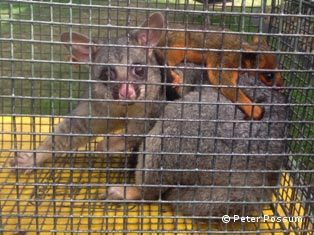
Traps are baited with appropriate food sources and checked at regular intervals — typically within 24 hours of setting. Once a turkey is captured, it is handled calmly and transferred to a secure, ventilated transport container designed for wildlife. The bird is kept in low-stress conditions and assessed for any signs of injury or illness before relocation proceeds.
We never use glue traps, leg snares, or any method that causes pain or injury. The entire process is carried out with the animal's welfare as a primary consideration alongside the practical goal of removing it from your property.
Relocation Procedures
Relocation is not simply a matter of driving the turkey to the nearest park and releasing it. To be effective and legally compliant, relocation requires careful site selection, appropriate timing, and proper release technique.
We release brush turkeys into pre-identified bushland areas with the habitat characteristics they need — dense understorey, leaf litter accumulation, and adequate food sources. These sites are selected to give the bird the best possible chance of establishing itself away from residential areas, and to reduce the likelihood of it finding its way back to your property.
Distance matters. Brush turkeys have a well-documented ability to return to familiar territory if released too close to their original location. Our relocation sites are chosen with this in mind, and our experience with Brisbane's urban fringe and surrounding bush corridors allows us to make placement decisions that reflect the biology of the bird, not just convenience.
Following relocation, we document the release location and conditions as required under our wildlife licence. For clients who want ongoing peace of mind, we offer a follow-up visit to confirm the bird has not returned and to assess whether any secondary birds are moving in to take advantage of the vacancy.
Preventing Future Nesting
Removing a brush turkey solves the immediate problem, but a property that attracted one turkey will attract others. The features that made your garden appealing — deep mulch, dense planting, a quiet corner, proximity to bushland — don't change with relocation alone. Prevention requires making the site less attractive and harder to establish.
The most effective deterrent is removing or managing the resources brush turkeys need for mound-building. Deep mulch layers should be replaced with coarser, less workable materials or covered with shade cloth pinned at the edges. Garden beds along boundaries can be edged with buried mesh to prevent excavation at the base of plantings. Motion-activated sprinkler systems are a surprisingly effective non-harmful deterrent that disrupts the turkey's routine without harming it.
We provide site-specific prevention advice following every relocation. This includes an assessment of which areas of your property are most vulnerable to recolonisation, practical landscape adjustments you can make, and recommendations for any physical barriers worth installing. The goal is to make your property consistently unappealing to the next bird that comes looking for a mound site.
Residential & Commercial Services
Brush turkey problems are not limited to backyards. We provide removal and prevention services for the full range of property types across Greater Brisbane.
For residential clients, the typical job involves a single territorial male causing damage to a garden, courtyard, or landscaped yard. We handle these efficiently, usually resolving the issue within a few days of initial contact. For properties in areas with high brush turkey pressure — particularly in the northern and western suburbs bordering bushland — we can also put longer-term management plans in place.
Commercial clients including schools, aged care facilities, golf courses, parks, and maintained public spaces present different challenges. Multiple birds, larger areas, and ongoing public access all require a more structured approach. We carry out commercial assessments, develop staged removal programmes where needed, and work with facilities teams to implement landscaping changes that reduce long-term turkey pressure.
All work is carried out with appropriate insurance, full wildlife licensing, and documentation suitable for body corporates, councils, or other bodies that require a formal record of wildlife management activity on site.
Call for Brush Turkey Removal
If a brush turkey is causing damage to your property, the sooner you act the better. The longer a bird is established on a site, the more entrenched its habits become — and the more material and effort it will take to fully remediate the damage once it's gone.
We operate across Greater Brisbane and respond promptly to enquiries. Our approach is straightforward: we assess the situation, explain your options clearly, carry out the trapping and relocation professionally, and leave you with practical advice to prevent recurrence.
All work is carried out by licensed wildlife handlers in full compliance with Queensland law. You don't need to navigate the regulations yourself — we manage the legal requirements, the paperwork, and the process end to end.
Call us today for an obligation-free assessment, or use our contact form to describe your situation and we'll get back to you promptly.